Humility That Inspired Greatness: Gene Carpenter
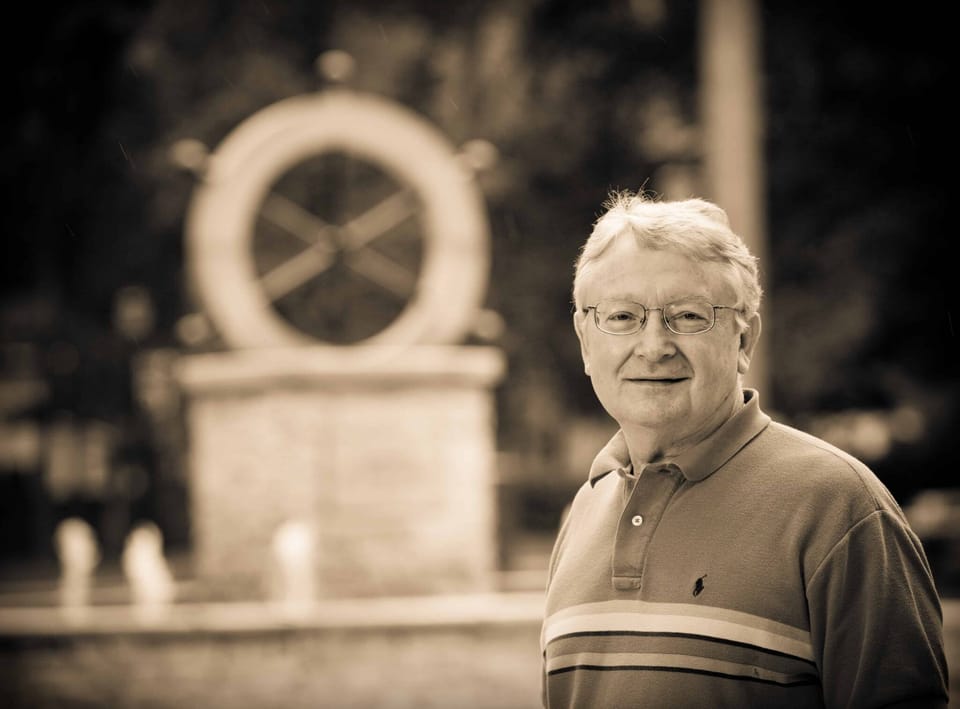
As I recounted the time I spent with my beloved professor, Gene Carpenter, over the last 12 years, I was surprised and saddened to realize I didn’t have any pictures with him. Indeed, the death of a loved one warrants a walk down memory lane, and I wish I had a photograph of our friendship to prove it.
Like many others, have shared many fun-filled moments with him, and it’s these memories that prove just as effective as a physical picture. With that said, I am honored that our paths crossed many times over the last decade, whether in the classroom, at lunch, or even out bass fishing together.
We began our relationship in 2001 at Bethel College, where I was a staff member working in the IT Department and he was a Hebrew and Old Testament professor. I wanted to take graduate classes in theology, but I knew Bethel was a conservative Protestant college and that I had a Roman Catholic upbringing. This made me wary of potential theological differences and the type of education I would receive.
One day, at a staff and faculty event, I noticed Dr. Carpenter in conversation with Dr. Long and tentatively approached them to share my reservations about the program. They listened patiently and quickly dispelled my concerns, saying that their focus was on Biblical Theology, not on denominationalism, and that I would not get “indoctrinated” with Protestantism.
They put me at ease, and I appreciated their kind and gracious attitude. Over the next three years, as I pursued my education, I had the privilege of taking two classes with Dr. Carpenter: Old Testament Interpretation and Exodus.
Over the next several years, my relationship with Dr. Carpenter grew on and off campus, and I began sitting with him and his lovely wife at church on Sundays. At times after the service, we would go out to lunch at either of his favorite restaurants: Arby’s or Culver’s, where he would rarely escape my biblical inquisitions.
One time during church, as we all sang during the worship time, he leaned over to me and asked, “Do you know what the difference is between Hallelujah and Alleluia?” I replied “no”, and he instructed me that the former is Hebrew while the latter is Latin. His constant teachings always made me smile because I always appreciated learning from him, even outside the classroom. My friendship with Gene meant being in a continual practicum, and I heartily accepted it.
Another favorite memory of Dr. Carpenter was after I submitted a lengthy paper on The Book of Deuteronomy. A few days later, I returned home from work and received a message from him on my answering machine. He told me about a recent paper I submitted to him and was clearly excited.
I couldn't believe it: For the next several minutes, he went on and on praising it, stating how excellent it was, wanting to give me an A+ (even though, as he stated, it might not be possible to actually give an A+ in the grading system). As I stood speechless, listening to the little black box, I was obviously thrilled to have such a renowned professor calling me. I remember being so proud to tell my friends that Dr. Carpenter had called me at home.
The final paper took me many grueling hours to write, and I knew it was solid, but I never dreamed there would be a message from my professor about it—I’m not sure how he even got my phone number! He didn’t have to call. He could have waited until he saw me in class next time. He could have just perused my paper and written a thoughtful response on the last page.
But not Gene Carpenter. He took the time to make a phone call and to leave a sincere message without a hint of pretense. To this day, this act of kindness encourages me to learn, to study, and to write to the best of my ability.
Academically, Dr. Carpenter’s achievements well preceded him at Bethel College and nationwide. He authored numerous commentaries on books of the Bible include Deuteronomy, Exodus, and Daniel. He also taught several Biblical languages, including Hebrew and Greek, and even helped translate the Book of Exodus for the New Living Translation.
There are too many accomplishments for me to list, and many of which I am unaware, but those closer to his academic circles could readily list dozens more published works. My epitaph is less about his curriculum vitae and more about his life in general, because he was one of the most balanced and diverse individuals I have ever known.
Gene Carpenter truly was a man of many talents and interests, who was just as at home in the Smoky Mountains as he was in the classroom, who could bounce easily from college professor to Sunday school teacher, from outdoorsman to husband, and from professor to friend. He also loved bodybuilding, movies, theology, teaching, fishing, his wife, and eating at Coney Express Hot Dogs.
To me, recounting the diversity and fullness of his life inspires me to live humbly as he did, to stay genuine, and to live a life worthy of writing about. Who he was, and the life he led, were an inspiration to many. The stories we are left with about Gene have the power to change us, even through his memory. I am thankful that he also wrote many published works that we can still study.
Death does have a way of refocusing us and our priorities, of remembering what is important, and of not taking for granted the family and friends who are still in our lives today. Of course, sayings like this are cliché-ish, but there is a reason we always recite them when someone dies: because, like death, we cannot escape our desperate attempts to find what is truly important in life. And when we find them, it would do us well to keep them close by, to nurture them, and not forgot what or who they are.
It is certain that our lives here will end, but our legacies can inspire others far beyond the few years we spend on earth. There are no tomorrows for my professor, but he lived well plenty of todays. Like Gene, let us lead full lives, embracing today what is not guaranteed to us tomorrow.
I am sad to say I don’t have any pictures with Gene. But his joyful smile, razor-sharp intellect, and loving demeanor are galvanized in my mind. He will always be my friend and teacher, instructing me even from death, by the life he lived—a legacy to which we can all aspire.
-Eric Demeter, M.A., Bethel College, 2005
Photo courtesy of Bethel College





Member discussion